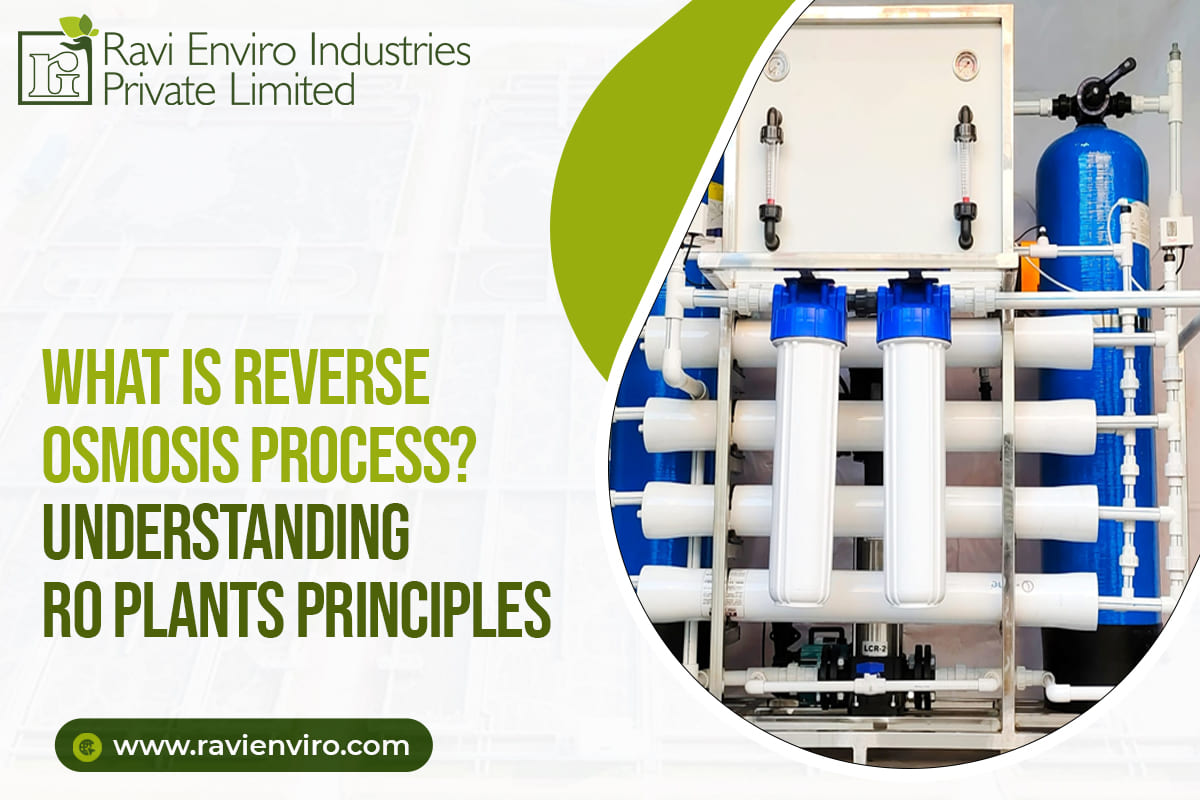
Reverse osmosis (RO) is a highly efficient water purification method. RO technology removes most contaminants from water by pushing the water through a semi-permeable membrane under pressure. To understand the working of RO plants, it is crucial to understand the process of reverse osmosis. From home drinking water systems, industrial water purification, to desalination, RO plants are highly effective in removing a wide range of contaminants. In this blog, we understand what reverse osmosis is and how this process is used in water treatment plants.
What is Osmosis?
To understand reverse osmosis, let’s first understand the osmosis process. Osmosis is a natural process where, through a semi-permeable water molecules from a solution with a high concentration of water molecules move to a solution with a lower concentration of water molecules.
Also Read: Advantages of Reverse Osmosis Water
What is Reverse Osmosis Process?
Reverse osmosis is a filtration process. This process involves using high pressure to force water through a semipermeable membrane, overcoming natural osmotic pressure. The high pressure forces water to move in the opposite direction, from a higher to a lower concentration, effectively removing impurities. Unlike conventional filters, RO plants separate clean water, passing through the membrane, and contaminants are removed in waste streams.
Understanding RO Plants Principles
RO plants employ the reverse osmosis principle to drive purification and remove undesired impurities. The industrial RO plant is highly effective in filtering out minerals like magnesium & sulfate, heavy metals like arsenic V, fluoride & lead, and other impurities.
Technical Principles of RO Plant
➤ Osmotic Pressure: The external pressure applied must be more than the osmotic pressure for optimal purification applications.
➤ Plant Membrane Structure: The thin membranes selectively allow water molecules to pass through the semipermeable membrane.
➤ Concentration Polarization: The best RO plant manufacturers in India ensure optimal system design and crossflow velocities to prevent system deterioration.
Operational Parameters of RO Plants
➤ Temperature Sensitivity: The semipermeable performance varies depending on temperature, needing proper monitoring.
➤ Salt Rejection: The industrial RO plant removes up to 99% of dissolved salts.
➤ pH Tolerance: The membranes have an optimal pH operating range.
➤ Permeability: It depends on the feed water quality, temperature and pressure.
Recent Innovations in RO Technology
➤ Smart RO Systems: In recent years, the integration of IoT (Internet of Things) platforms has allowed for monitoring water quality, timely replacement of filters, and getting maintenance alerts.
➤ Energy-efficient RO Membrane: Latest membranes are designed to reduce energy consumption and achieve higher rejection rates for contaminants, making industrial RO plants more sustainable and miximium water recovery.
➤ Hybrid RO Systems: Sophisticated modern RO plants integrate UV (Ultraviolet) and UF (Ultrafiltration) technologies to get rid of bacteria, viruses, organic & inorganic impurities, pesticides and other contaminants.
Wrapping Up
Advanced RO plants are now not just a necessity but a long-term investment for ensuring clean and safe water. Reverse osmosis systems are powerful systems to improve water quality in different settings, from businesses to industrial applications.When it comes to investing in an industrial RO plant, choose a reliable and efficient plant designed to meet your specific needs. At Ravi Enviro Industries Private Limited, as a RO plant company in India offer industrial RO plants renowned for their high-performance, energy-efficient, compact and custom designed. Explore our range of wastewater treatment plants to find the perfect system for your needs. For quotes, call us.
Also Check: RO Water Plant: Process, Principles, and Industrial Uses