- Jan 28, 2026
- Ravi Enviro
- Effluent Treatment
- 0 Comments
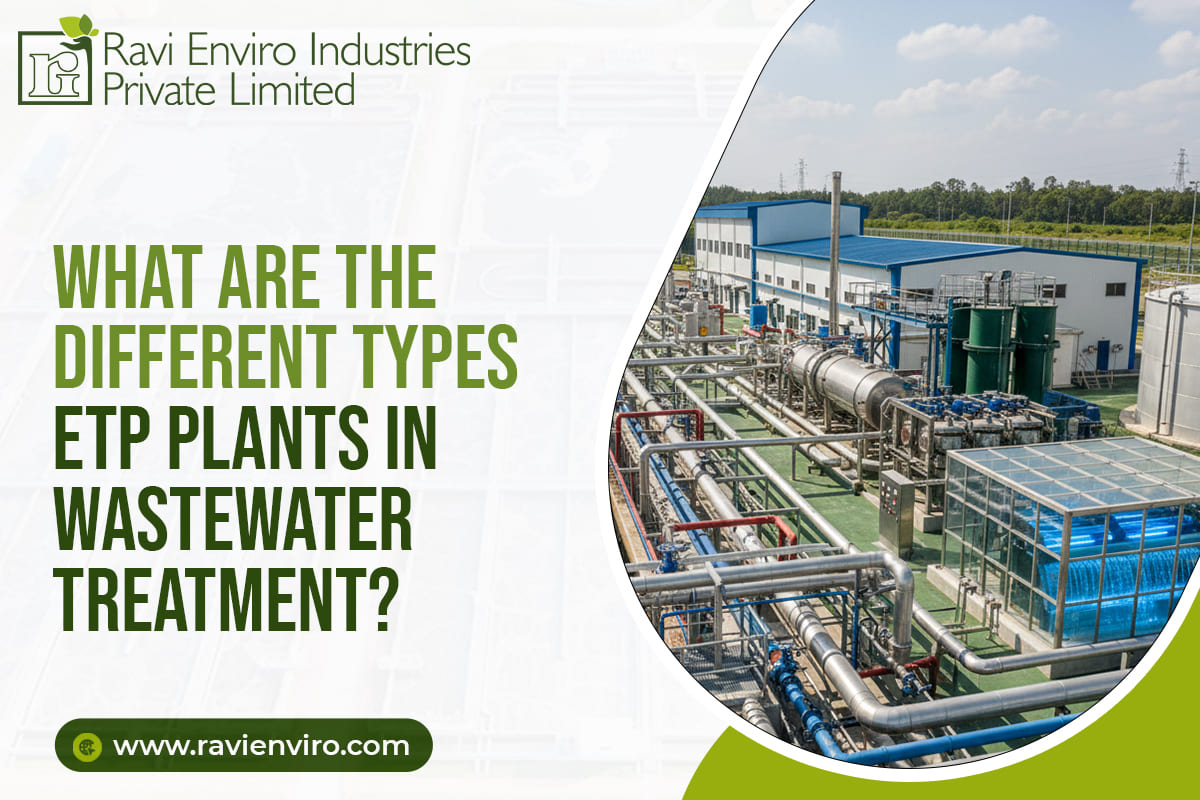
Effluent treatment is crucial for treating the wastewater generated from the manufacturing and processing industries. It includes multi-level treatment to remove contaminants from industrial water. Effluent primarily consists of chemicals, heavy metals, dyes, paints, and solid discharges. However, many people face questions like how to identify which type of ETP is perfect for your industry, and what the different types of ETP plants are in wastewater treatment. In this blog, we will learn more about ETPs and their types.
What is the Process of Wastewater Treatment?
The wastewater contains a lot of pollutants, such as organic waste, chemicals, dyes, paints, plastics, fabrics, etc. To remove these components, there are several steps of processing that completely make the water reusable. Ravi Enviro Industries Private Limited is a trusted effluent treatment plant manufacturer in India. We manufacture top-quality wastewater treatment plant equipment and parts. Our product range includes dryers, aeration tanks, vessels, membranes, filters, etc. Call us to know more about our products.
➤ Primary Treatment: Primary treatment is the first physical stage of wastewater treatment. It removes the large contaminants from the water through screening and sedimentation. Materials like grit, sand, oil, grease, and floating debris are separated, reducing the load on further treatment processes.
➤ Secondary Treatment: The second stage of treatment focuses on removing dissolved and suspended organic matter using biological processes. Microorganisms are added to the water, which break down organic pollutants in aeration tanks or bio-reactors, converting them into harmless by-products. This stage significantly reduces the biological oxygen demand.
➤ Tertiary Treatment: Tertiary treatment is the advanced purification stage. It removes the remaining nutrients, pathogens, and fine contaminants using advanced filtration, disinfections, or chemical treatments. The treated water becomes safe for reuse, discharge, and industrial application.
Read: Role of ETPs in Sustainable Industrial Practices
Types of Effluent Treatment Plants
➤ Food Processing ETPs: The food and beverage industry produces a lot of effluent with chemicals, contaminants, toxic, and non-toxic substances. The ETP in the food and beverage industries is employed to prevent the negative environmental effects of these substances. They execute all physical and chemical filtration, along with the biological treatment techniques, that can process and treat the wastewater.
➤ Wine and Brewery ETPs: The modern breweries release tons of high-BOD water with starch, carbohydrates, sweeteners, unstable and unsaturated fats. The ETPs here filter out the wheat/ rice, yeast, and ethanol.
➤ Medicinal ETPs: The pharmaceutical industries produce a lot of wastewater that contains a variety of chemical-solvents, harsh compounds, and deadly biological waste. They contain the RO systems attached to improve the COD, BOD, and TSS.
➤ Textile Industry ETPs: The garment or apparel sector releases dyes and chemicals used in printing patterns. This water is treated for repurposing in a natural setting with the aid of textile ETPs.
Conclusion
The effluent treatment plants are a necessity for any type of industry that produces wastewater and releases it into healthy waters. Installing an ETP is very simple, easy, and cost-effective. It helps in keeping the environment healthy and manages waste effectively. You can purchase a highly effective ETP from Ravi Enviro Industries Private Limited. We are a renowned effluent treatment plant suppliers in India. With a broad range of products and equipment for the wastewater treatment plant, we revolutionize the industries and promote sustainability. Our products include clarifiers, STPs, ETs, RO plants, flash mixers, and many more. Interested? Give us a call.
Check: Advanced Wastewater Treatment Technologies
Frequently Asked Questions
➤ What is the ETP treatment process?
Four main types of ETP treatments are chemical treatment, biological treatment, and combined treatment, using both chemicals and microbes.
➤ What are the 4 types of sewage management?
Four main types of sewage management processes include physical processing, biological processing, chemical processing, and sludge water management.
➤ What are BOD and COD in ETP?
The BOD is the biological demand for oxygen. It measures the amount of oxygen used by microbes to break down biodegradable waste. COD is the chemical oxygen demand. It measures the oxygen required for the chemical oxidation of all organic matter.
➤ What is the full form of TDS in ETP?
TDS in ETP stands for the total dissolved solids. Examples of TDS include salts, minerals, calcium, magnesium, etc.