- May 15, 2026
- Ravi Enviro
- RO Plant
- 0 Comments
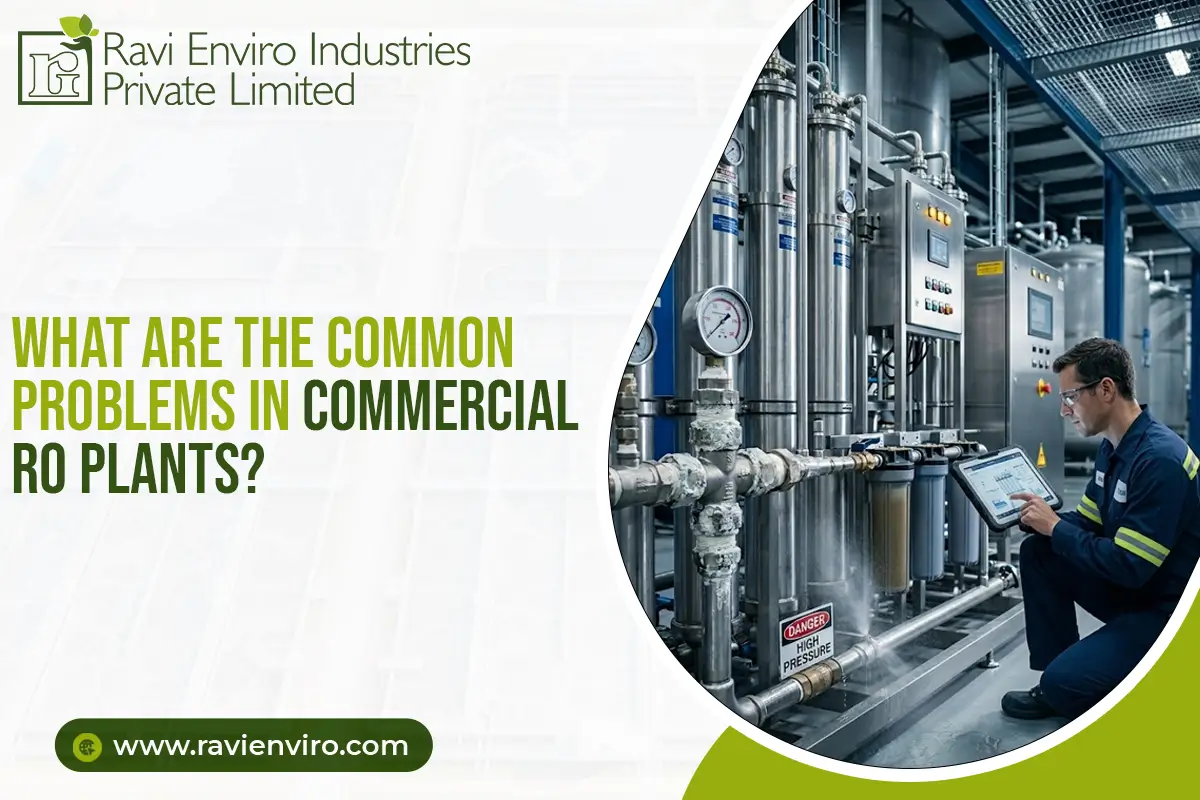
Commercial RO plants (reverse osmosis) play an important role in providing a large volume of clean, purified water in different sectors. From institutional establishments to industrial facilities, these water treatment systems are highly reliable. However, sometimes even the most well-designed RO systems can face performance issues. Ageing components, feed water variability and negligent maintenance can lead to low water output, pressure imbalances, increasing TDS levels, membrane fouling or scaling or other issues. Recognising these common problems in commercial RO plants at an early stage can reduce downtime, protect components and prolong the service life of your RO plants.
5 Common Problems in Commercial RO Plants & Their Solutions
Problem 1: High TDS in RO Plant Output – Causes & Fix
When the Total Dissolved Solids (TDS) exceeds the acceptable level (for example,>100 ppm for drinking), it is an indication that the RO plant is not working properly. This could be due to aged or damaged membranes, bypass valve malfunction or worn O-rings or housing leaks.
Solution: According to some of the best RO plant manufacturers in India, check the feed Vs. permeate TDS to measure the % rejection. If the rejection is <90%, it is time to replace the membrane. Also, ensure all the loose connections and leaks are checked to avoid untreated water mixing with purified water.
Problem 2: RO Membrane Fouling – Why It Happens & How to Prevent It
This is one of the most common issues in the commercial and industrial RO plants. Look out for symptoms like gradual flow reduction, increasing conductivity or unwanted materials like dirt, mineral or organic compounds on the membrane surface. The probable reasons for membrane fouling could be high calcium or silica in the feed water or inconsistent antiscalant dosing.
Solution: Begin by analyzing water for calcium, magnesium and silica levels. Look out for the antiscalant pump calibration and dosing rate. Now adjust the pH to 6.5 to 7.0 to tackle fouling.
Problem 3: Low Feed Pressure in RO Plant – Diagnosis & Solution
Low pressure on the feedwater can impact the operation of the reverse osmosis plant in India. A low pressure implies the water does not pass through the membrane, thereby reducing output.
Solution: Make sure the pump is working properly, and there are no blockages in feedlines or filters. Ensure to replace pre-filters and backwash multimedia filters.
Problem 4: RO Plant Producing Too Much Wastewater – How to Reduce It
Sometimes the RO plant might produce excessive wastewater, leading to higher operating costs and water wastage.
Solution: As per the industrial RO system manufacturer in India, ensure to adjust the recovery ratio of the RO plant to reduce the production of wastewater. Also, replace the old or malfunctioning membrane to enhance efficiency.
Problem 5: RO Plant Pump or Motor Failure – Signs & Preventive Steps
A faulty pump and motor are another major issue in commercial RO plants. This could be due to wear and tear, faulty electricals or overheating, leading to pump or motor failure.
Solution: Ensure to regularly inspect pumps and motors. Also, check alignment and inspect coupling. Make use of a clamp meter to verify motor amps and replace worn bearings and seals.
Commercial Reverse Osmosis System Maintenance Schedule
| Frequency | Task |
| Daily | Check feed & product TDS, monitor flow rate, visual leak inspection |
| Weekly | Inspect & replace pre-filters, verify antiscalant dosing rate |
| Monthly | Check pump pressure, inspect valves, fittings and motor amps |
| Quarterly | Backwash multimedia filter, inspect O-rings, check recovery ratio |
| Half-Yearly | Chemical Clean-In-Place (CIP) of membranes, full pressure test |
| Annually | Replace membranes if rejection <90%, replace filter cartridges, full system audit & instrument calibration |
Conclusion
Understanding the common problems in commercial RO plants and how to fix them ensures uninterrupted operations. By recognising the symptoms, businesses can reduce downtime, save costs and ensure smooth operations. Ravi Enviro Industries Private Ltd. is a leading RO plant company in India specializing in commercial and industrial RO plants. Apart from design and manufacturing, we also offer operation & maintenance services for RO plants and other industrial water treatment plant manufacturers in India. To discuss your requirements, call us today.
Frequently Asked Questions (FAQs)
How do I know if my commercial RO membrane needs replacement?
If TDS rejection drops below 90% or product water TDS exceeds 100 ppm, the membrane likely needs replacement. Gradual flow reduction and rising conductivity are early warning signs.
How often should a commercial RO plant be serviced?
Pre-filters should be replaced every 3–6 months. Membranes typically last 2–3 years depending on feed water quality. A full system inspection – pumps, O-rings, seals, and dosing systems – should be done every 6 months.
What causes membrane fouling in commercial RO plants?
High calcium, magnesium or silica in feed water combined with inconsistent or incorrect antiscalant dosing are the most common causes. Maintaining feed water pH between 6.5–7.0 and regular antiscalant pump calibration prevents fouling.
What is a good recovery ratio for a commercial RO plant?
A well-optimised commercial RO plant should achieve 70–80% recovery ratio – meaning 70–80 litres of purified water per 100 litres of feed water. Anything significantly lower indicates membrane inefficiency or system imbalance.
Can low feed water pressure damage an RO plant?
Yes. Consistently low pressure prevents water from passing through the membrane effectively, reducing output and stressing the pump. Blocked pre-filters and clogged feedlines are the most common causes and should be checked immediately.
How can I reduce wastewater from my RO plant?
Optimise the recovery ratio settings, upgrade to energy-efficient membranes and consider adding a Zero Liquid Discharge (ZLD) system if wastewater volume is a recurring operational concern.