- Aug 13, 2025
- Tejas
- Waste water
- 0 Comments
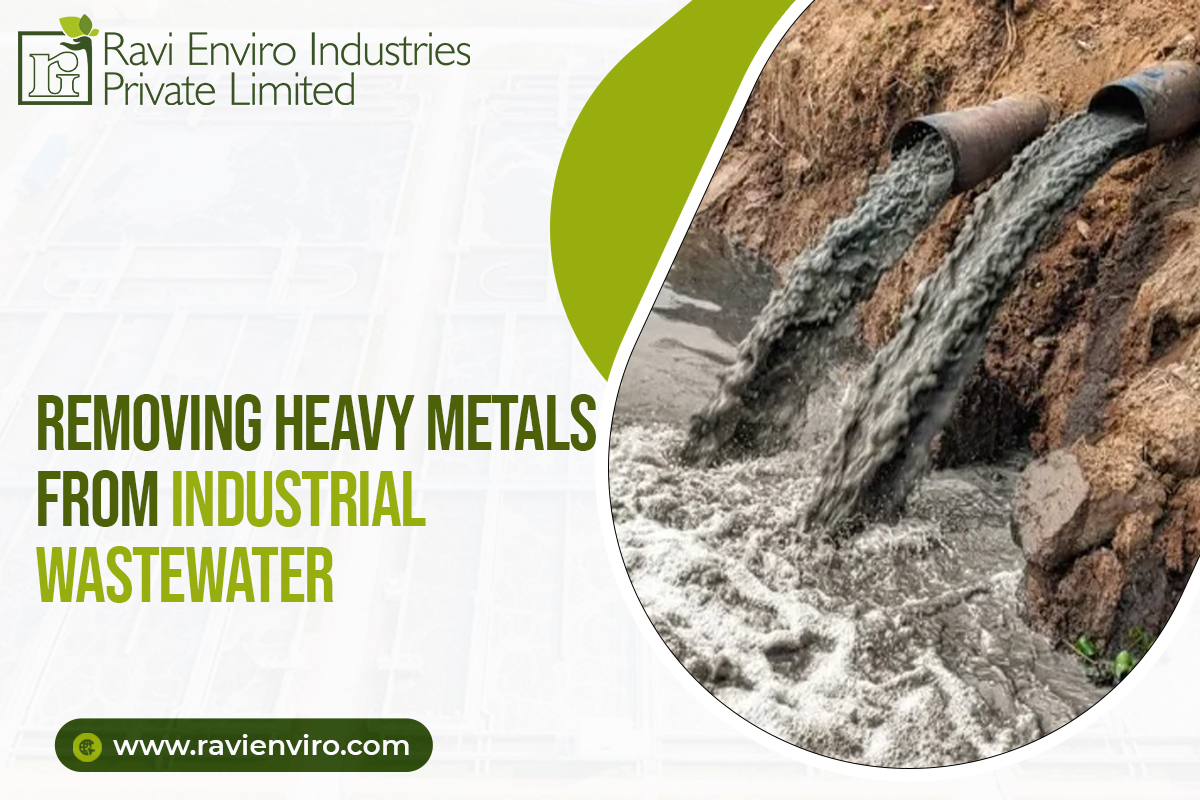
Heavy metal contamination is one of the major environmental concerns. Industrial wastewater is the primary source of heavy metals discharged into the water bodies, causing severe problems for humans and aquatic ecosystems. Thus, reducing toxic heavy metals from wastewater should be the top priority, crucial for environmental regulation compliance and safeguarding public health. To prevent heavy metals from becoming a threat, industrial wastewater treatment plants (WWTPs) play an important role. WWTPs plants use a multi-phase stage blending physical, chemical and biological methods to eliminate heavy metals to tolerate trace levels.
Heavy Metal Removal From Industrial Wastewater With WWTPs Plants
Chemical Precipitation
This is one of the most common methods for removing heavy metals from industrial wastewater. In this process, the dissolved metal ions are converted into solid particles, which can be removed through filtration or settling. Chemical precipitation is particularly beneficial in removing nickel, zinc, cadmium and copper. The process involves adjusting pH levels and dosing metal coagulants like alum or ferric acid. This leads to insoluble metal hydroxides that are removed through filtration or sedimentation.
Membrane Filtration
Along with conventional methods, membrane filtration technology offers effective removal of heavy metals and other dissolved contaminants. Membrane technology, like reverse osmosis (RO) plants, is installed for ultra-pure water treatment. RO plants’ semi-permeable membranes push water, allowing only water molecules while restricting contaminants, including heavy metals. When it comes to adopting membrane filtration, RO plants are the preferred choice. Ravi Enviro Industries Pvt. Ltd is the most trusted RO plant company in India, for our high-performance Industrial RO plants that are particularly effective in removing heavy metals like mercury, arsenic and lead, suitable for commercial and large-scale water treatment facilities.
Ultrafiltration Treatment Plants
Ultrafiltration is another wastewater treatment technology, highly effective in removing heavy metals and contaminants from streams. UF plants eliminate dissolved and colloidal compounds at low transmembrane pressure. Ultrafiltration is a particularly beneficial method of recovery of heavy metals, including iron (I), iron (II), copper (II) and chromium (III) from aqueous solutions. A high-performance ultra filtration water treatment plant helps achieve high-metal ions and larger monovalent ions.
Advanced Oxidation
Another popular method is the advanced oxidation process. This process involves UV photolysis, electrochemical oxidation and other mechanisms to transform soluble heavy metal residuals to insoluble oxides that can be easily removed.
Biological Treatment
The biological treatment involves using microbial activity to remove heavy metals from wastewater streams. Microbes like bacteria and fungi can immobilize or transform metal through the mechanism of biosorption, bioaccumulation and biotransformation. Biological treatment combined with other methods like chemical coagulation to absorb metals from water, and transform them into lesser harmful compounds.
Ion exchange
Another popular technique used for water treatment to eliminate undesired metal ions like potassium and sodium is ion exchange resins. These resins consist of specific functional groups that target metal ions, including lead, mercury, copper and cadmium from water streams.
Improve Your Wastewater Treatment Process with REIPL
At Ravi Enviro Industries Pvt. Ltd., has a water treatment plant manufacturer in India, we’ve been at the forefront in designing, engineering and manufacturing of wastewater treatment solutions. To effectively remove heavy metals from industrial wastewater, get in touch with us. We can assist at every stage to ensure compliance with rigorous environmental regulatory standards and meet your sustainability goals. Call us to discuss your water treatment requirements.