- Aug 28, 2025
- Tejas
- Effluent Treatment
- 0 Comments
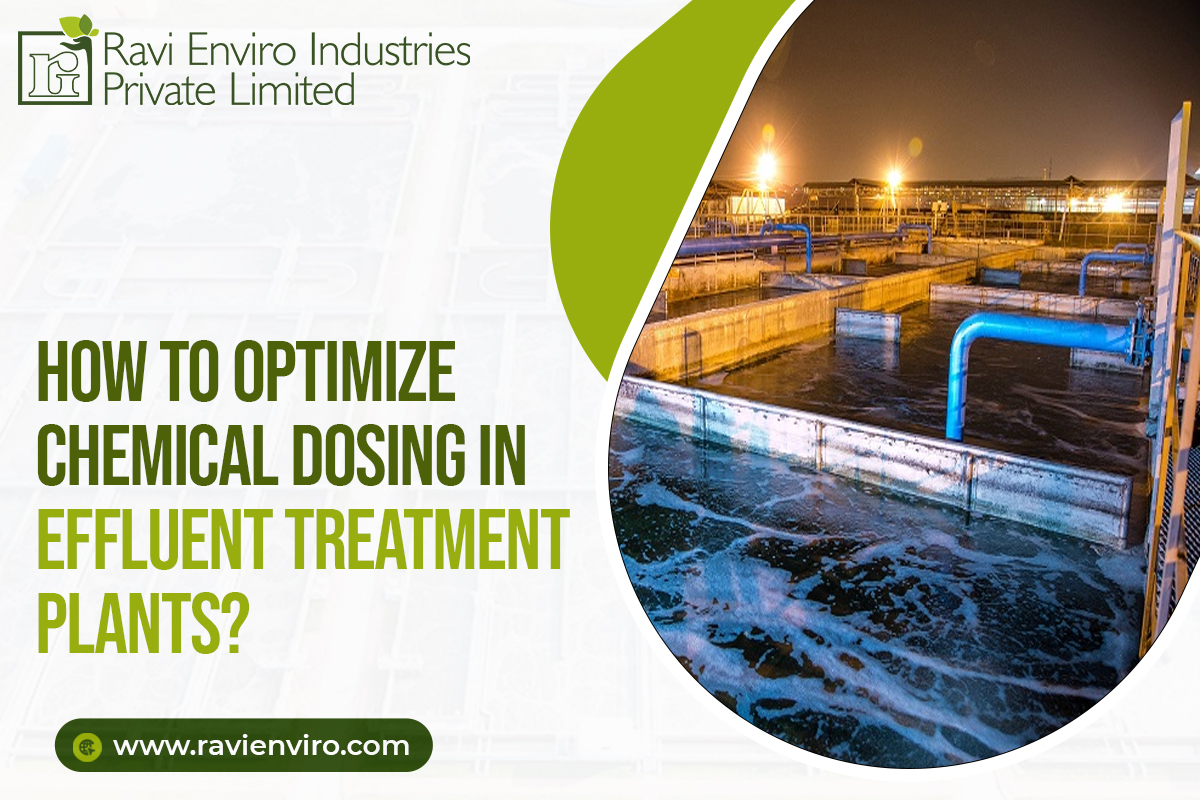
Industries are required to comply with stringent water treatment regulations. Failure to comply with regulatory standards can result in substantial penalties, public scrutiny, and environmental damage. In this, effluent treatment plants (ETPs) play a crucial role in protecting the environment and ensuring public health. Chemical dosing is an important process in the wastewater treatment plant to ensure water quality and safety across different applications. Adequate dosing ensures the contaminants are removed with minimal chemicals and reduced costs. In this blog, we discuss how to optimize chemical dosing in ETP plants for optimal treatment results.
Importance of Proper Chemical Dosing in ETP Plants
Proper chemical dosing ensures that the desired water quality requirements are met by effective removal of contaminants & pollutants. At Ravi Enviro Industries Pvt. Ltd, as one of the most trusted ETP suppliers in India, we recommend an adequate dosing for high-quality water treatment results. Overdosing or underdosing can result in ineffective results, non-compliance with industrial & environmental standards and increased ecological impact. This is why it is crucial to optimize chemical dosing in ETP plants. Also, explore our range of anti-scalant dosing skids for chemical dosing available in semi-automatic, manual and fully automatic configurations.
Chemical Dosing in Different Processes in Effluent Treatment Plants
➤ pH Adjustments: Incorporating alkalis or acids to maintain pH levels
➤ Coagulation & Flocculation: Coagulants like aluminium sulphate aggregate suspended particles.
➤ Disinfection: Chemicals like hypochlorous acid or chlorine to remove pathogens before discharge
➤ Odour Control: Adding chemicals like potassium permanganate to neutralize undesired odours.
Crucial Parameters that Impact Chemical Dosing
➤ Water Characteristics: The concentration of BOD (biochemical oxygen demand), COD (chemical oxygen demand), TSS (total suspended solids), colloids & heavy metals.
➤ Temperature & pH: These parameters influence dosing efficiency & chemical reactions.
➤ Flow Rate Changes: Changes in wastewater volumes affect the requirements of chemical dosing.
➤ Reaction Time: Proper mixing & retention time impact the effectiveness of the treatment.
Also Read: How Wastewater Treatment Plants Address Chemical Contaminants
Best Strategies to Optimize Chemical Dosing in Effluent Treatment Plants
Employ the Jar Test for Adequate Dosing
The Jar Test is a method to select the right chemical dosing for flocculation and coagulation. The procedure of Jar Test for chemical dosing is as follows:
➤ The wastewater sample is collected
➤ Coagulants & flocculants are incorporated at different doses
➤ The settling properties are observed & documented
➤ The best dosing is the one with precise clarification, with a low-chemical dosage
➤ This method prevents overdosing or underdosing for optimal treatment results.
Embracing Real-time Monitoring & Automation
Automation in water treatment plants has become the need of the hour. It ensures the dosing is precise through continuous monitoring of the wastewater quality.
Some of the best automation techniques for ETP plants are:
➤ Turbidity Sensors: This helps in the regulation of coagulant dosing and the separation of solid-liquid.
➤ pH-Based Chemical Dosing: Automation allows for pH maintenance by adjusting chemical dosing as needed.
➤ Proportional Flow Dosing: Adjust the chemical feed for real-time flow variations.
Automation makes the water treatment more efficient, minimizing human errors and low operational costs.
Enhance pH Control for Improved Treatment
An optimal pH level is crucial for effective chemical reactions. The following are some tips for better pH control:
➤ Choose appropriate acids or alkalis
➤ Opt for varying dosages at a smaller quantity than larger dosages
➤ Optimized pH results in improved efficiency & reduced chemicals
Adequate dosing is important for the efficient functioning of ETP plants at low operating costs. Opt for these strategies to optimzie chemical dosing of your ETP plants. However, if you want to revamp your existing effluent treatment plant or design a new ETP system specifically customized for your industrial requirements, REIPL is your trusted partner. As one of the best industry-leading effluent treatment plant manufacturers in India, we can assist you at every stage of water treatment. For more assistance, give us a call.
Also Read: Effluent Treatment Plant manufacturer in Faridabad & ETP plant supplier in Gurgaon