- Apr 28, 2026
- Ravi Enviro
- blog
- 0 Comments
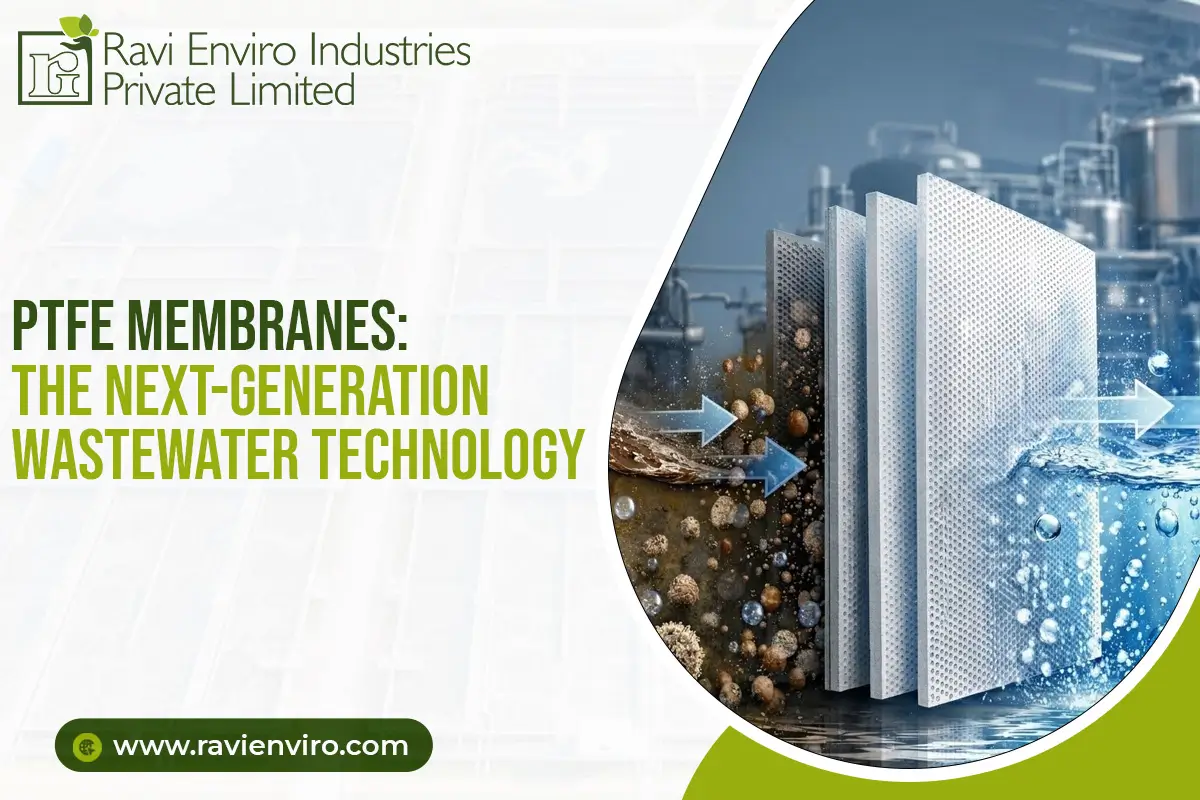
PTFE (Polytetrafluoroethylene) membrane has emerged as an important technology in wastewater treatment applications. These PTFE membranes are used across industries that require ultra-clean water, such as pharmaceuticals, food processing and water treatment. As water filtration treatment continues to advance, PTFE membranes are quickly becoming a preferences choice for water treatment systems.
What is a PTFE Membrane?
A PTFE membrane is a microporous material made from fluoropolymer through a biaxial stretching process. It is a modern filtration solution that separates particles, liquids, or gases with high precision. These membranes are designed with a microporous structure, allowing them to filter even the smallest contaminants while maintaining high flow rates. This makes PTFE membranes ideal for industries that require ultra-clean filtration, such as pharmaceuticals, water treatment, and food processing. The PTFE membrane in India has gained significant attention due to its versatility and reliability. Industries are shifting toward advanced filtration systems that offer both efficiency and sustainability.
Structure and Working Principle of PTFE Membranes
Hollow Fibre Design & Strength
One of the defining features of Poreflon/PTFE membranes is their reinforced hollow fibre structure. This design provides:
- High mechanical strength
- Resistance to breakage
- Flexibility under pressure
The hollow fibre configuration allows for a larger surface area, enhancing filtration capacity while maintaining compact system design.
Microporous Filtration Mechanism
The PTFE membranes operate through a physical filtration process, where contaminants are separated based on size and interaction with the membrane surface.
Key mechanisms include:
- Size exclusion: Blocking suspended solids and microorganisms
- Surface filtration: Capturing particles on the membrane surface
- Hydrophobic interaction: Repelling water in gas filtration applications
This ensures efficient and reliable wastewater treatment across various applications.
Key Benefits of PTFE Membranes in Wastewater Treatment
- Long Operational Life: PTFE membranes have a significantly longer lifespan compared to conventional membranes. This reduces replacement costs and improves system reliability.
- Reduced Maintenance Costs: Thanks to their anti-fouling properties, PTFE membranes require less frequent cleaning and maintenance, leading to cost savings.
- Consistent Filtration Performance: Even in high-load conditions, PTFE membranes maintain consistent filtration efficiency, ensuring high-quality treated water.
REIPL: An Authorized Distributor of Sumitomo PTFE Membranes
Ravi Enviro Industries Pvt.Ltd is a leading supplier of Sumitomo PTFE membranes in India, offering advanced solutions for wastewater treatment. The PTFE membranes deliver advanced water treatment solutions, including ultrafiltration plants and reverse osmosis plants. These membranes enable industries to reuse treated water, reducing freshwater consumption and promoting sustainability.
PTFE Membranes are truly the next-generation wastewater technology, redefining how industries approach water treatment. With unmatched durability, efficiency, and sustainability, they offer a future-ready solution for modern challenges. To inquire about REIPL’s Sumitomo PTFE membranes, call us today.
Read: Factors that Affect the Performance of Reverse Osmosis Membrane Filters
FAQs
1. What makes PTFE membranes ideal for wastewater treatment?
Their chemical resistance, durability, and anti-fouling properties make them highly effective.
2. Are PTFE membranes better than PVDF membranes?
Yes, especially in harsh and high-load conditions.
3. What industries use PTFE membranes?
Chemical, pharmaceutical, textile, and wastewater treatment industries.
4. How do PTFE membranes reduce maintenance costs?
Their anti-fouling nature reduces cleaning frequency and downtime.
5. Can PTFE membranes be used in MBR systems?
Yes, they are widely used in membrane bioreactors for efficient treatment.