- Apr 25, 2026
- Ravi Enviro
- Effluent Treatment
- 0 Comments
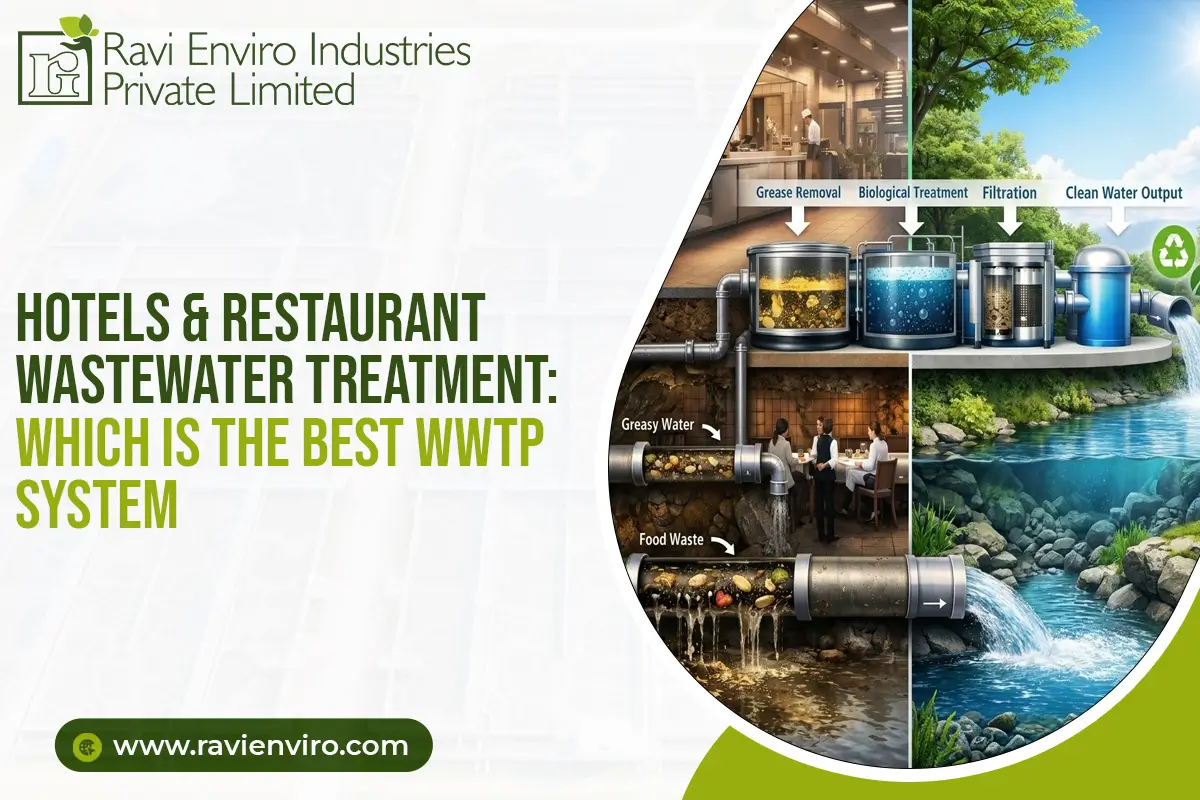
Hotels and restaurants generate a distinctive wastewater that differs from typical domestic or industrial effluents. This wastewater contains a high concentration of organic matter, oil, grease, food particles, fats and detergents. A wastewater treatment plant for restaurants ensures regulatory compliance and lower operational costs. Some of the different treatment systems include sewage treatment plants and effluent treatment plants for restaurants. In this blog, we cover these systems and help you pick the right system for your industry.
Understand Restaurant Wastewater Characteristics & Challenges
Restaurant wastewater compositions vary based on cuisine, establishment size and cleaning water pattern. Understanding this composition can help you choose the right system from a water treatment plant company in India that can handle specific contaminants.
Sources & Characteristics of Wastewater
- High Organic Matter & COD
When it comes to kitchen wastewater, the organic content is higher than that of municipal sewage. The total COD (Chemical Oxygen Demand) concentration can range from 1250 to 5363 mg/l (varies), including starch, proteins and fats produced during food preparation.
- Fats, Oils & Grease (FOG)
FOG in restaurant wastewater typically ranges from 92 to 1067 mg/l. These compounds can come from liquid and solid fats, vegetable oils, sauces and cooking fats. FOG concentrations are seen as non-polar glycerol esters, which pose a major wastewater treatment challenge.
Challenges in Treating Restaurant Wastewater
- pH Variations
Hospitality wastewater coming from restaurants demonstrates notable pH fluctuations depending on the occupancy and usage patterns. Kitchen sink wastewater has a neutral pH value ranging from 6.8 to 7.3. On the other hand, wastewater from dishwashing has a high alkaline level ranging between 10.5 and 12.0. These variations can impact the biological process and plant integrity.
- Fluctuating Flow Rate & Loading Pattern
Contaminants entering the wastewater treatment system are measured as total suspended particles, BOD and flow rate. Restaurants experience varying wastewater loads depending on usage patterns.
Read: Role of Effluent Treatment Plants in Pharmaceutical Industry
Wastewater Treatment Technology System Options for Restaurants & Hotels
- Sequencing Batch Reactors (SBR Technology)
Experienced water treatment plant companies like Ravi Enviro Industries Pvt.Ltd manufacturers effluent treatment plants backed with the latest technology, including SBR. As one of the top effluent treatment plant manufacturers in India, the SBR configuration can effectively remove organic matter and meet regulatory compliance.
- Membrane Bioreactors (MBR) Systems
The MBR technology blends membrane filtration with biological treatment systems, producing high-quality treated water. MBR systems’ compact design and superior filtration make them ideal for restaurants and hotels.
- Moving Bed Biofilm Reactors (MBBR) Technology
The MBBR is an advanced biological wastewater treatment process biological wastewater treatment process that combines the benefits of both attached growth (biofilm) and suspended growth systems. It is widely used in applications like hotels, restaurants, and industrial wastewater treatment due to its flexibility and ease of operation. Many ETP manufacturers in India recommend MBBR technology for industries where wastewater contains high organic loads and variable compositions.
Read: Why Do Shopping Malls Need an Efficient STP Plant?
Choosing the Right System: Key Selection Factors
Selecting the most suitable wastewater treatment system for hotels and restaurants is not a one-size-fits-all decision. The right choice depends on several technical, operational, and regulatory factors. Making an informed decision ensures efficient treatment, cost savings, and long-term sustainability.
1. Wastewater Characteristics
Understanding the nature of wastewater is the first and most critical step.
Key parameters include:
- BOD (Biochemical Oxygen Demand)
- COD (Chemical Oxygen Demand)
- FOG (Fats, Oils, and Grease)
- pH and chemical composition
2. Required Effluent Quality
The intended use of treated water plays a major role in system selection.
Discharge only: Basic treatment (MBBR or SBR may suffice)
Reuse (flushing, gardening, cooling): Advanced treatment (MBR with PTFE membranes recommended)
3. Space Availability
Space constraints are common in urban hotels and restaurants.
- Limited space: Compact systems like MBR are ideal
- Ample space: Conventional or MBBR systems can be considered
4. Regulatory Compliance
Environmental regulations are becoming stricter. Ensure the system meets local discharge norms, while also considering future regulations and sustainability goals.
REIPL’s Advanced Wastewater Treatment Solutions
When it comes to treating complex hotel and restaurant wastewater, a standard approach simply doesn’t work. Every facility has unique challenges ranging from high grease content to fluctuating loads, which is why Ravi Enviro Industries Pvt. Ltd. (REIPL), one of the top industrial water treatment plant manufacturers in India, delivers customized ETP solutions designed to meet specific operational needs. Whether it’s a boutique hotel or a large commercial kitchen, REIPL designs systems that are tailor-made for your wastewater profile.
Partner with REIPL to implement customized, future-ready ETP systems that deliver performance and efficiency.
Read: How Important Is pH Control in Wastewater Treatment Plants